
Reflections on mentorship, professional growth, and the people who help shape the next generation of dietitians.
Every dietitian can point to someone who helped shape their path into the profession. As I continue sharing reflections through Pancreas in Progress, I’m sharing these experiences for those following along on this journey, whether you’re a dietetic student, a fellow career changer, or simply curious about the realities of supervised practice and the profession of dietetics. Over the past few weeks, I’ve had the opportunity to work alongside several incredible preceptors, and it has become increasingly clear how much their role shapes the internship experience. One of the most important lessons I’ve learned is that preceptors do far more than supervise rotations; they help guide, challenge, and welcome interns into the profession.
Preceptors have the ability to set the tone for an entire rotation. From the first day you arrive, the way they approach teaching, collaboration, and professional development can shape how you view not only the rotation itself but also the profession as a whole. In many ways, they serve as a bridge between classroom learning and real-world practice. Their willingness to share knowledge, invite interns into meaningful experiences, and provide honest feedback plays a critical role in preparing the next generation of dietitians.
One of the most impactful experiences I had recently was observing my preceptor, Dr. Norman-Burgdolf, present alongside her colleague from the Department of Entomology, Dr. Tiffin, at the Lawn and Turf Short Course Conference hosted at the Hardin County Extension Office. Their presentation focused on Alpha-Gal Syndrome, a condition that has gained increased attention in Kentucky due to its connection with tick bites. Watching them present highlighted not only the importance of interdisciplinary collaboration but also the role Extension professionals play in educating communities about emerging health concerns. As an intern, having the opportunity to observe this kind of professional engagement firsthand allowed me to see how research, education, and community outreach come together in practice.
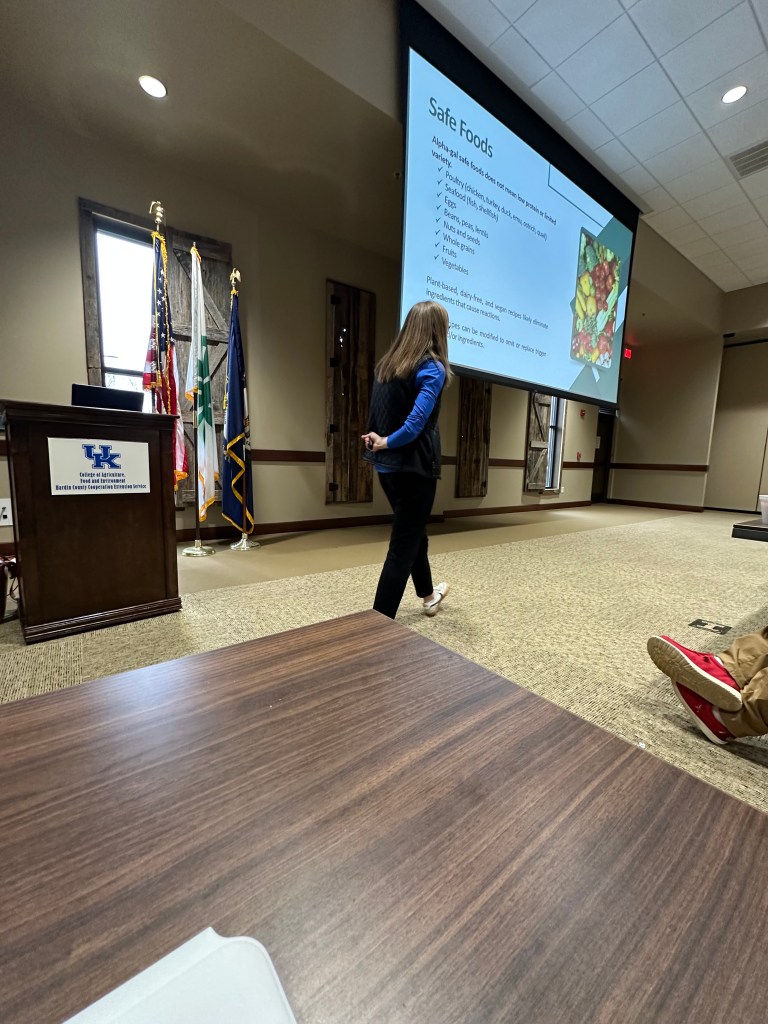
Observing Dr. Norman-Burgdolf present on Alpha-Gal Syndrome at the Lawn and Turf Short Course Conference at the Harding County Extension Office, an opportunity to see community education and interdisciplinary collaboration in action.
Another meaningful experience occurred at the Fayette County Extension Office, where I assisted Extension Agent Caroline McMahan during the Laugh & Learn program. This program is designed for preschool-aged children and focuses on activities that help develop fine motor, gross motor, and social skills. During the session, I had the opportunity to read the book of the month to the group, which was both fun and reminiscent of reading to my nieces and nephews before bedtime. Watching how Caroline engaged the children and guided the activities reminded me that nutrition education often begins long before people are making independent food choices. Experiences like this reinforce how important early childhood programming can be in building healthy habits and fostering positive relationships with food and activity.
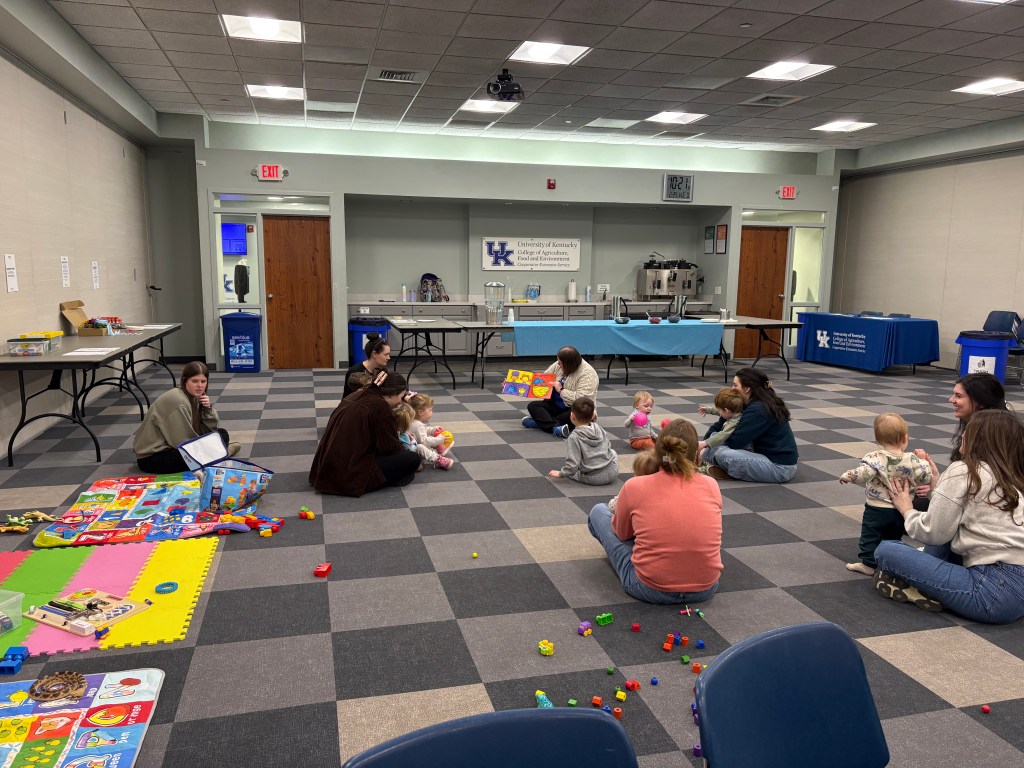
Reading the book of the month during Laugh & Learn at the Fayette County Extension Office, supporting early childhood development through activities that build social, fine motor, and gross motor skills.
The opportunity that pushed me the furthest professionally was presenting at the Kentucky 4-H Volunteer Conference alongside my preceptor Dr. Luecking and Dr. Natese Dockery, a Clinical Assistant Professor and Extension Specialist for Mental Health and Well-Being. Our session, Fostering Confidence: Embracing Healthy Perspectives on Food and Self-Image, focused on helping volunteers understand how the way we talk about food can influence how we, and those around us, feel about it. As well as the connection it has to how we view our bodies and our own self-image. I led an activity called “The Rephrase Game,” where participants practiced reframing common food-related statements to promote healthier and more supportive messaging around food and body image. Being trusted with a leadership role in the presentation was both exciting and a little nerve-wracking, but it was also an incredible learning opportunity that helped me build confidence as an educator.
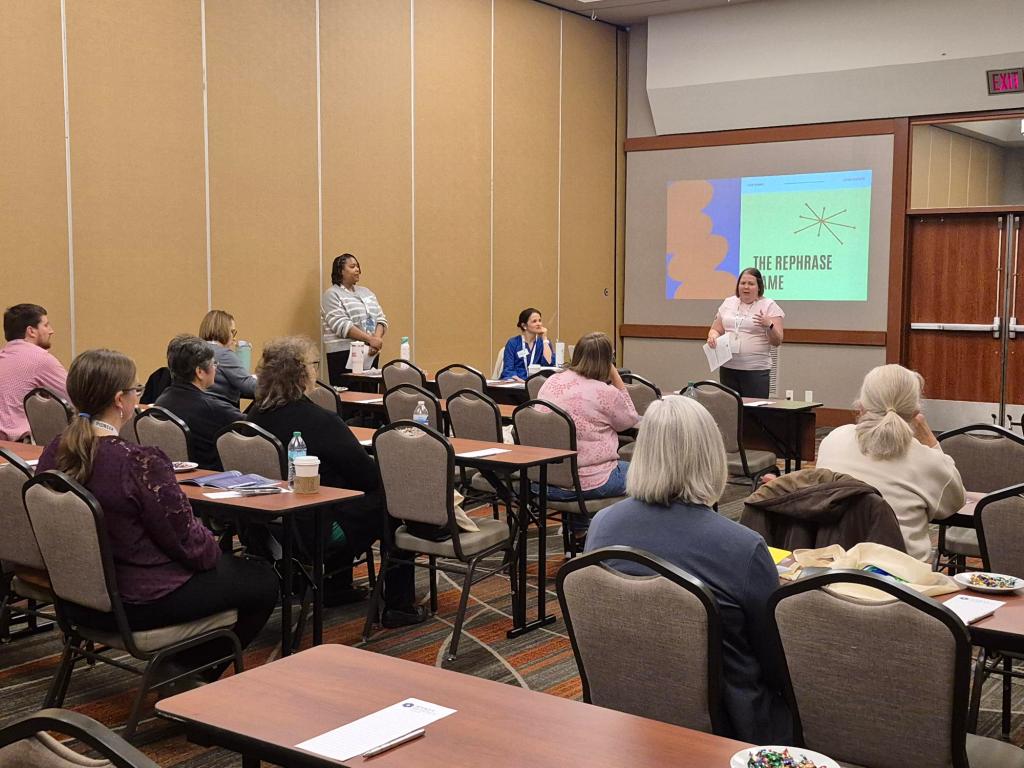
Presenting “The Rephrase Game” during the session Fostering Confidence: Embracing Healthy Perspectives on Food and Self-Image at the Kentucky 4-H Volunteer Conference.
Experiences like these illustrate the true value of precepting. Preceptors are not only sharing their knowledge; they are actively shaping how interns develop professionally. By inviting interns into real-world projects, presentations, and programs, they allow us to see the profession from the inside out. They also help us identify our strengths, build confidence, and learn how to navigate situations that may initially feel unfamiliar.
Preceptors can influence how interns perceive different areas of dietetics. Someone who may not initially feel excited about a particular rotation, such as community nutrition, may discover a newfound appreciation for the field when guided by an engaged and supportive preceptor. Their enthusiasm, mentorship, and willingness to share experiences can transform a rotation from something that simply fulfills a requirement into something that inspires future career interests.
Most importantly, preceptors play a vital role in welcoming interns into the profession. Supervised practice can feel intimidating at times, especially when transitioning from student to emerging professional. Having mentors who create an environment of encouragement, curiosity, and collaboration helps make that transition smoother and more meaningful.
As I reflect on these past few weeks, I’m incredibly grateful for the preceptors who have taken the time to teach, guide, and challenge me. Their commitment to mentoring interns is not only shaping my own professional journey but also helping ensure that the next generation of dietitians enters the field prepared, confident, and inspired. Their mentorship reminds me that becoming a dietitian isn’t just about gaining knowledge; it’s about learning from those who are willing to share their experience and wisdom.
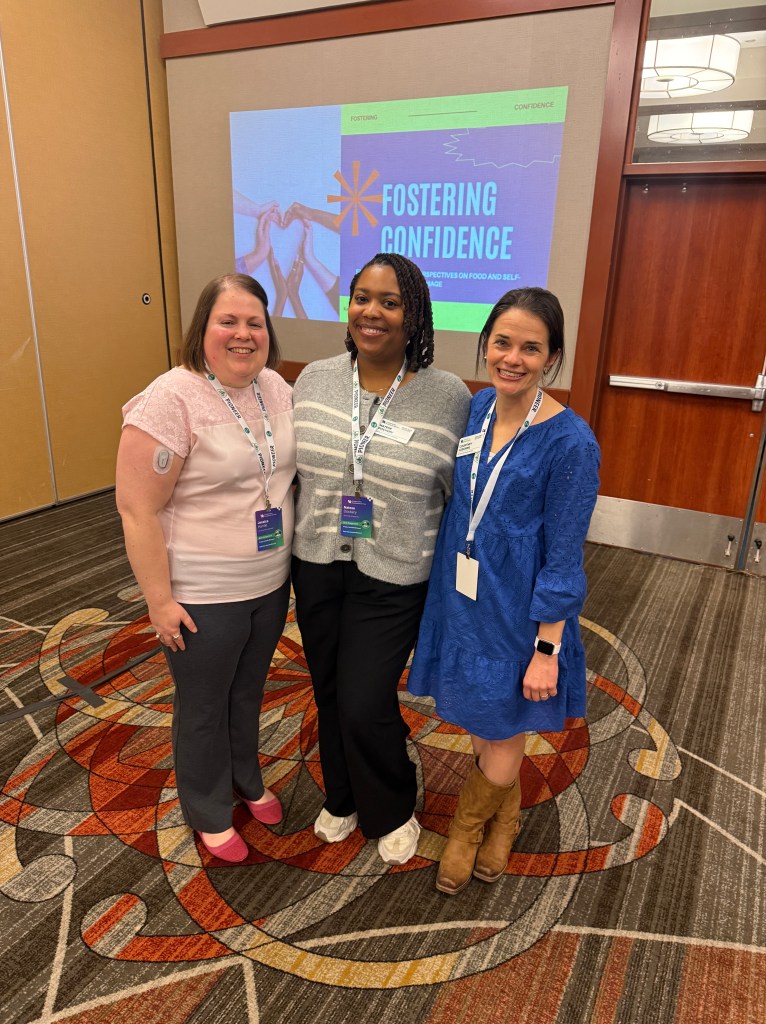
With Dr. Luecking (right) and Dr. Natese Dockery (center) following our presentation Fostering Confidence: Embracing Healthy Perspectives on Food and Self-Image at the Kentucky 4-H Volunteer Conference.


 Pancreas in Progress
Leave a comment