
Two Weeks In: Expectations, Extension, and Finding the Right Fit
Hello and welcome to the first post of Pancreas in Progress. Whether you’re a dietetic student following along through supervised practice, someone curious about community nutrition, or someone considering a non-traditional career change, I’m glad you’re here. This blog will serve as a space to reflect on my internship experiences while sharing what I’m learning about nutrition, community engagement, and professional growth.
It has officially been two weeks since I began my community rotation with DHN Extension, and it didn’t take long to realize that I was exactly where I needed to be. Before starting this rotation, I expected community nutrition to feel slower and more behind the scenes. I had the opportunity to shadow the Nutrition Education Program within extension two years ago and while it expanded my knowledge of their reach, I never expected it to be as interconnected as it is. Instead, I quickly discovered that Extension work is dynamic, collaborative, and deeply embedded in the everyday lives of the communities it serves. From the first day, I could tell this experience would challenge me in meaningful ways while offering opportunities to learn far beyond what I had initially imagined.
One of the first things that stood out to me was how connected everything felt. Through conversations with my preceptors, I discovered shared small-town ties between my family and theirs—an unexpected but fitting reminder of how deeply rooted Extension work is within the community. As I learned more about the wide reach of Extension, it became clear that this rotation would allow me not only to gain new skills, but also to see firsthand how nutrition education and community programs come together to support families across the state.
My first day looked a bit different from some of my fellow interns. I was still on campus, walking into the same building where I’ve taken classes for the past four years. However, this time my mindset was completely different. During orientation, former interns and preceptors emphasized the importance of treating supervised practice like a job you would want in the future. With that advice in mind, I walked into Funkhouser not as a student, but as a developing professional—treating each day as an opportunity to grow toward my goal of becoming a registered dietitian.
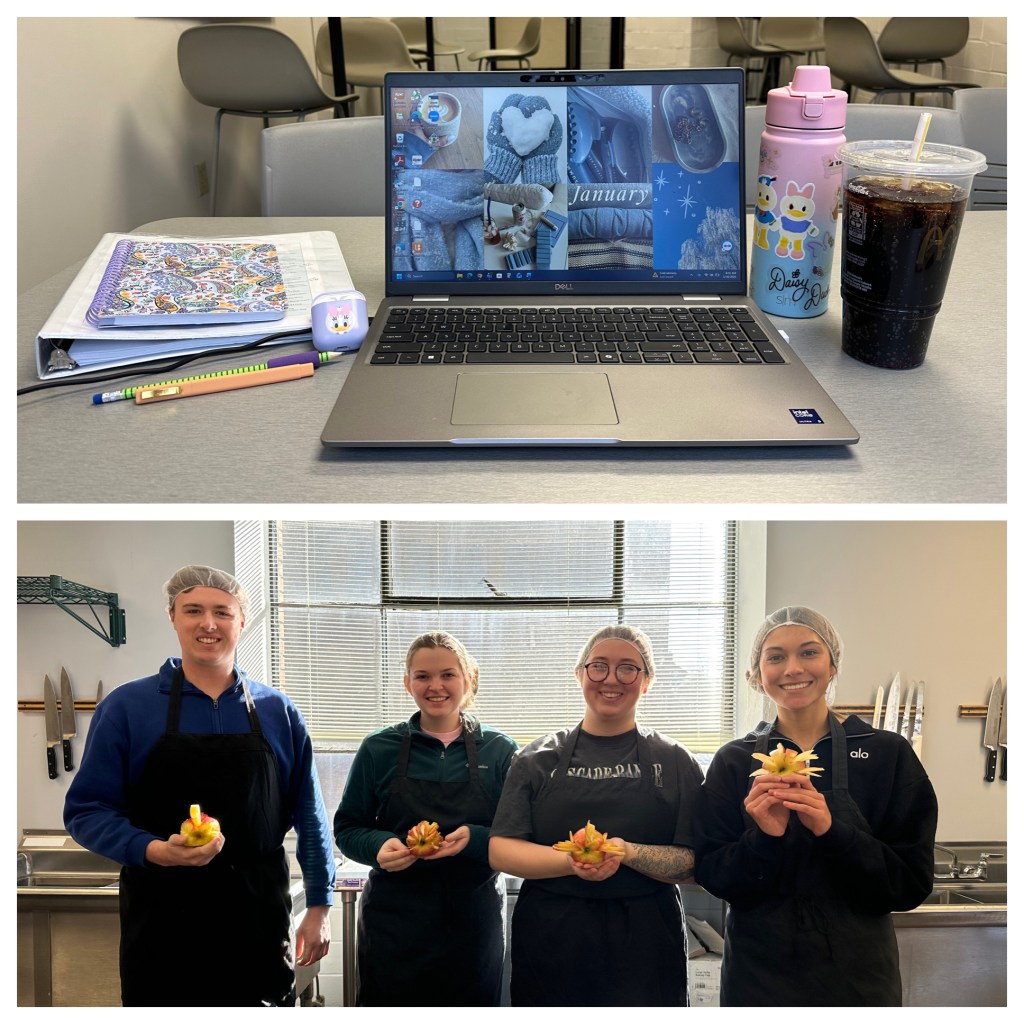
That shift in perspective became especially clear when I found myself on the other side of the student experience. On my first day, I helped judge an apple carving competition in Lemon Tree, a University of Kentucky course where students learn the intricacies of running a food service establishment. The class is responsible for preparing and serving meals, following food safety guidelines, and applying standardized recipes throughout the semester. Watching the students work reminded me how much I’ve grown since taking that course myself, and how memorable my own less-than-successful apple “bird” carving attempt was. This group, however, clearly came ready to impress, showcasing creativity and skill.
Over the past two weeks, I’ve also had the opportunity to participate in a variety of meetings covering topics ranging from the newly released Dietary Guidelines for Americans to the development of a program called Tiny Tourist. Through these experiences, I’ve already begun working toward CRDN 2.3: Demonstrate active participation, teamwork, and contributions in group settings. The Tiny Tourist initiative is a collaborative effort involving Family and Consumer Sciences Extension and the Fine Arts sector, with the goal of helping restaurants meet criteria that make them more family-friendly.
As the team discussed the development of this program, I was able to contribute insights based on my lived experience, particularly drawing from my hometown of Paducah and the artist relocation program that helped revitalize its downtown area. A key component of both initiatives is community ownership: when people feel welcomed and supported, they are more likely to engage with local businesses and spaces. For Tiny Tourist, this includes considerations such as offering healthy side options for children or ensuring changing stations are available in both men’s and women’s restrooms. Being part of these conversations reinforced how impactful community-driven programs can be and highlighted the importance of interdisciplinary collaboration.
These first two weeks have been just a glimpse into what this community rotation will offer. In the coming weeks, I’m especially excited to work with the Waste Not, Want Not (WiN-Win) Kentucky program, which focuses on addressing food insecurity and food waste across the state. Each experience so far has reinforced how interconnected nutrition education, community engagement, and public health truly are. As I continue this rotation, I look forward to sharing how my expectations continue to evolve and how these experiences shape my understanding of community nutrition and my role within it. This is just the beginning, and I can’t wait to see where the next few weeks lead.


 Pancreas in Progress