
Food Service Rotation, End of Week 8
Over the past eight weeks, I’ve had the opportunity to learn from the entire Food and Nutrition team at Baptist Health Lexington, and as this rotation starts to wind down, I’ve found myself reflecting on how much this experience has challenged my perspective in the best possible way.
One of the biggest moments of this rotation came during my Kentucky Derby-themed meal event. Like any well-planned project, we had timelines, recipes, production schedules, and what felt like every contingency mapped out in advance. On paper, everything looked seamless.
Reality had other plans. And honestly? That ended up being one of the most valuable lessons of all.
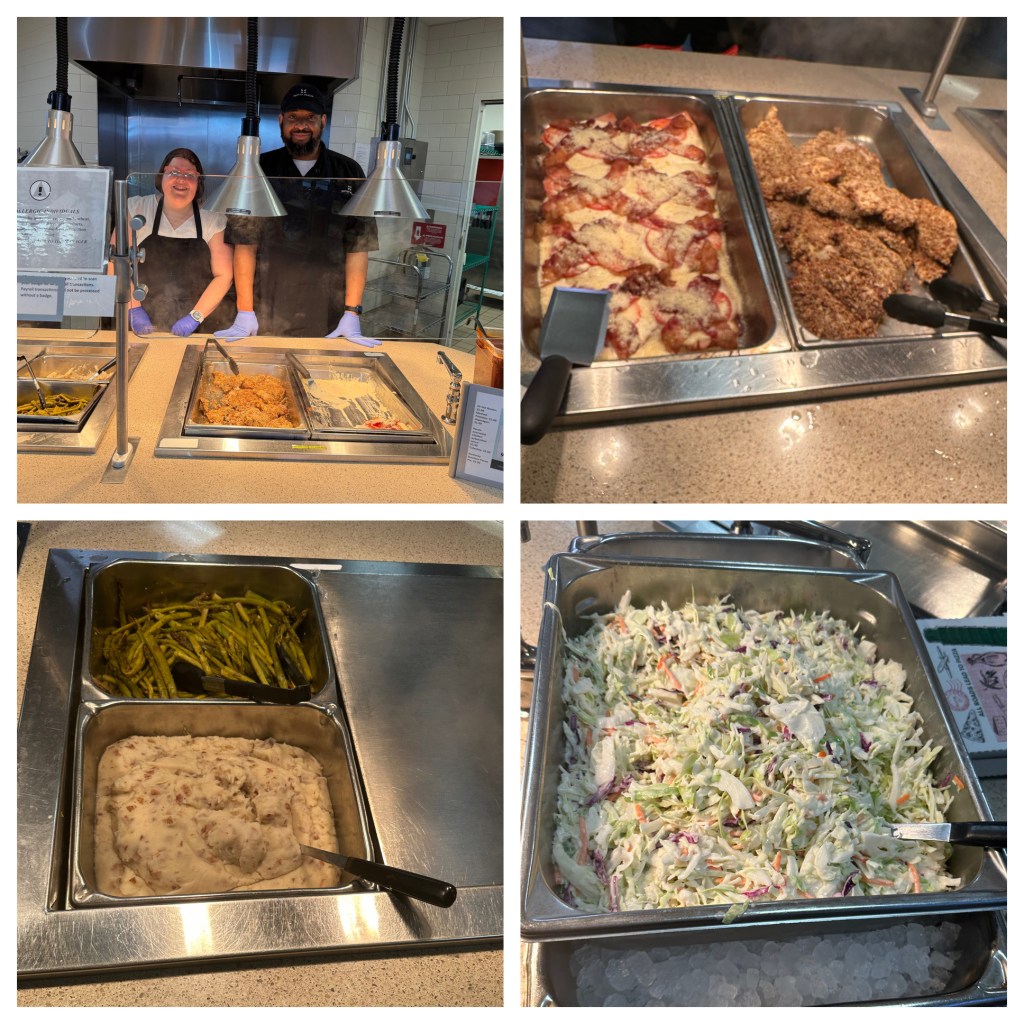
Proof that even the best plans come with a little chaos, and that great teams make it all come together.
As our time for service approached, small challenges started popping up, as they often do in food service. But what stood out most wasn’t what went wrong. It was watching how quickly the team adapted. While Jon led the preparation of the meal, everyone stepped in wherever help was needed. I found myself prepping desserts, making coleslaw, and assembling Hot Browns alongside the team. Cooks Denny, Kathy, and Charles jumped in while still managing their own responsibilities and meals. Even Kendall, who typically oversees procurement and distribution, stepped in to help make our Bourbon sauce. Fun fact: I learned that Kendall used to be a cook, so we got to pull him back into the kitchen for the day! Seeing the full execution of a concept I helped develop reinforced how much planning, flexibility, and teamwork goes into delivering food service experiences that promote both enjoyment and wellness (CRDN 5.3).
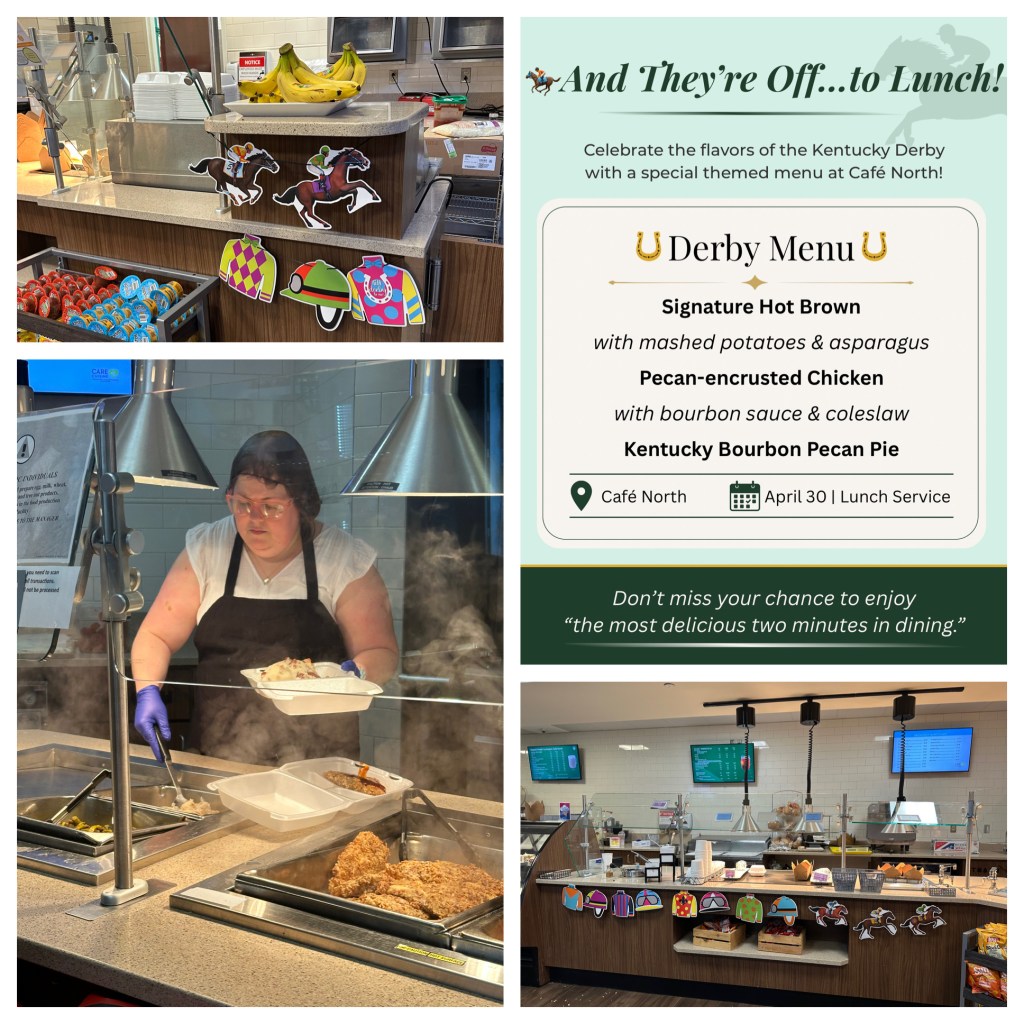
🏇 Watching an idea go from a flyer on my laptop to a fully executed event was one of the biggest highlights of this rotation. 🥳
It was a reminder that successful operations are rarely built on one person doing everything perfectly. They succeed because of teams that know how to adapt, communicate, and support one another when things don’t go according to plan. In many ways, that feels like life itself. We can prepare endlessly, but flexibility is often what determines success.
Another experience that challenged my thinking was participating in a tasting for new inpatient menu items. During the discussions that followed the tasting of different menu items, I gained a deeper appreciation for how much intentionality goes into menu development. The team wasn’t simply selecting recipes that met nutrition standards or production needs. They were thoughtfully choosing meals that reflected the culture of Baptist Health and the traditions of Kentucky.
There was a genuine desire to create meals that could provide patients with comfort during what may be some of the hardest moments of their lives. The conversations reminded me that food in healthcare serves a much larger purpose than simply meeting nutritional needs. It can offer familiarity, connection, and a sense of normalcy when people need it most.It was a reminder that successful operations are rarely built on one person doing everything perfectly. They succeed because of teams that know how to adapt, communicate, and support one another when things don’t go according to plan. In many ways, that feels like life itself. We can prepare endlessly, but flexibility is often what determines success.
Another experience that challenged my thinking was participating in a tasting for new inpatient menu items. During the discussions that followed the tasting of different menu items, I gained a deeper appreciation for how much intentionality goes into menu development. The team wasn’t simply selecting recipes that met nutrition standards or production needs. They were thoughtfully choosing meals that reflected the culture of Baptist Health and the traditions of Kentucky.
There was a genuine desire to create meals that could provide patients with comfort during what may be some of the hardest moments of their lives. The conversations reminded me that food in healthcare serves a much larger purpose than simply meeting nutritional needs. It can offer familiarity, connection, and a sense of normalcy when people need it most.
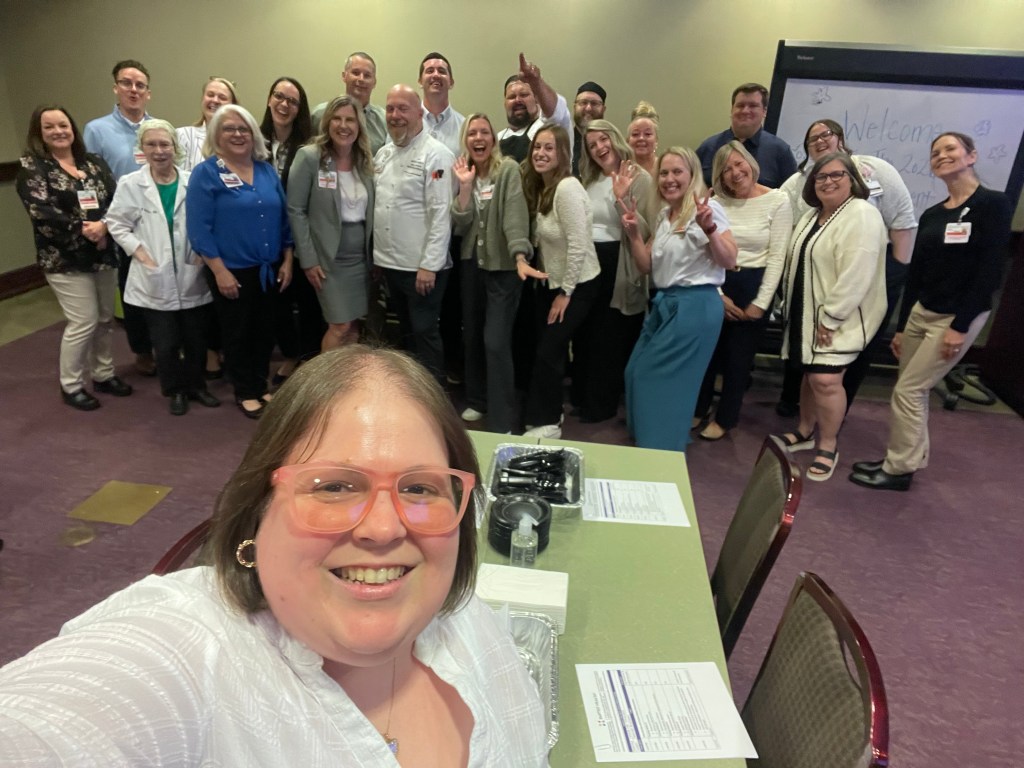
Taste Testing With the Baptist Health Family! Their official group photo was great…but I needed one for my camera roll too.
This rotation has also raised questions I didn’t expect to be asking myself.
Before this experience, I often viewed dietetics through a primarily clinical lens. Now, I find myself wondering what it could look like to build a career that exists outside traditional clinical spaces while still making a meaningful impact. How can I continue using food as a tool for health while also honoring its role in comfort, culture, and connection? And perhaps one of the biggest questions I now have is: why aren’t more registered dietitians in food service leadership roles?
Watching leaders like Karen, who has served in many different roles as a Registered Dietitian, navigate patient care, retail operations, kitchen management, and administrative responsibilities has shown me how valuable an RD perspective can be in these positions. She understands both the clinical significance of nutrition and the operational systems needed to make quality food accessible.
The most important thing I’ve learned about myself through this rotation is that I thrive in environments that constantly evolve. I’ve learned that I enjoy strategy, problem-solving, and yes, even a little bit of chaos. This rotation has pushed me outside of my comfort zone in ways I didn’t expect, but it also reminded me of a younger version of myself who thrived in fast-paced environments and loved being part of something bigger than herself.
Food service has shown me that I may be more adaptable than I realized and that my future in dietetics might be broader than I once imagined.
“One step closer, one lesson learned, and always in progress.”


Leave a Reply